How to Get Rid of Hump Back: 5 Simple Exercises That Work
If you’ve noticed a bump forming at the base of your neck, you're not alone. While it may seem like a permanent problem, the truth is: you can reduce and even reverse it with the right approach.
What Causes Hump Back?
Most cases of postural hump are caused by:
Slouching or sitting for long periods
Forward head posture (“tech neck”)
Tight chest muscles
Weak upper back and neck muscles
How Chiropractic Can Help
Chiropractic care restores movement in the spine, corrects alignment, and helps activate the muscles that support better posture. Your daily habits impact the appearance of your posture. It is for this reason that we recommend pairing in-office treatment with simple, consistent exercises like the five below.
5 Exercises to Improve Posture and Reduce Hump Back
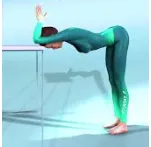
1. Table Or Chair Puppy Pose
(Stretches upper back and shoulders)
Stand facing a table or countertop.
Place your hands on it, shoulder-width apart.
Step back and lower your chest, letting your head drop between your arms.
Hold for 30–60 seconds. Repeat 2–3 times
2. Wall Angels
(Strengthens postural muscles)
Stand with your back flat against a wall.
Raise arms into a “W” position, elbows bent.
Slowly move arms up to a “Y” shape, then return.
Keep your arms and back against the wall as much as possible.
Do 10 reps, 2 sets.
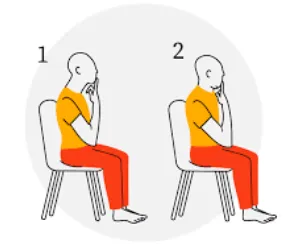
3. Chin Tucks with Extension Bias
(Corrects forward head posture and improves curve)
Sit or stand tall.
Gently pull your chin back (like making a double chin).
Move your gaze upward.
Hold for 5 seconds, repeat 10–15 times.
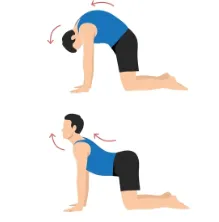
4. Cat-Cow Stretch
(Improves spinal mobility)
On all fours, inhale and arch your back (Cow).
Exhale and round your spine (Cat).
Repeat for 10–15 slow reps.
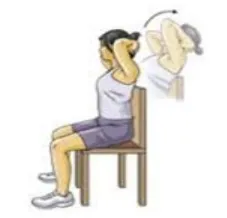
5. Seated Upper Thoracic Extension
Sit in a chair with a firm backrest that stops at mid-scapula.
Interlace hands behind your head.
Gently extend your upper back over the chair back.
Quick Tips for Better Posture
Raise your screens to eye level.
Take breaks every 30–45 minutes.
Strengthen your core to support your spine.
Avoid thick pillows that push your head forward while sleeping